Living and Dying Under Dobbs, vol. 9 (no audio). Scroll down to read the stories.
Volume 9 of the ongoing textile book.
Scroll down to read the stories.
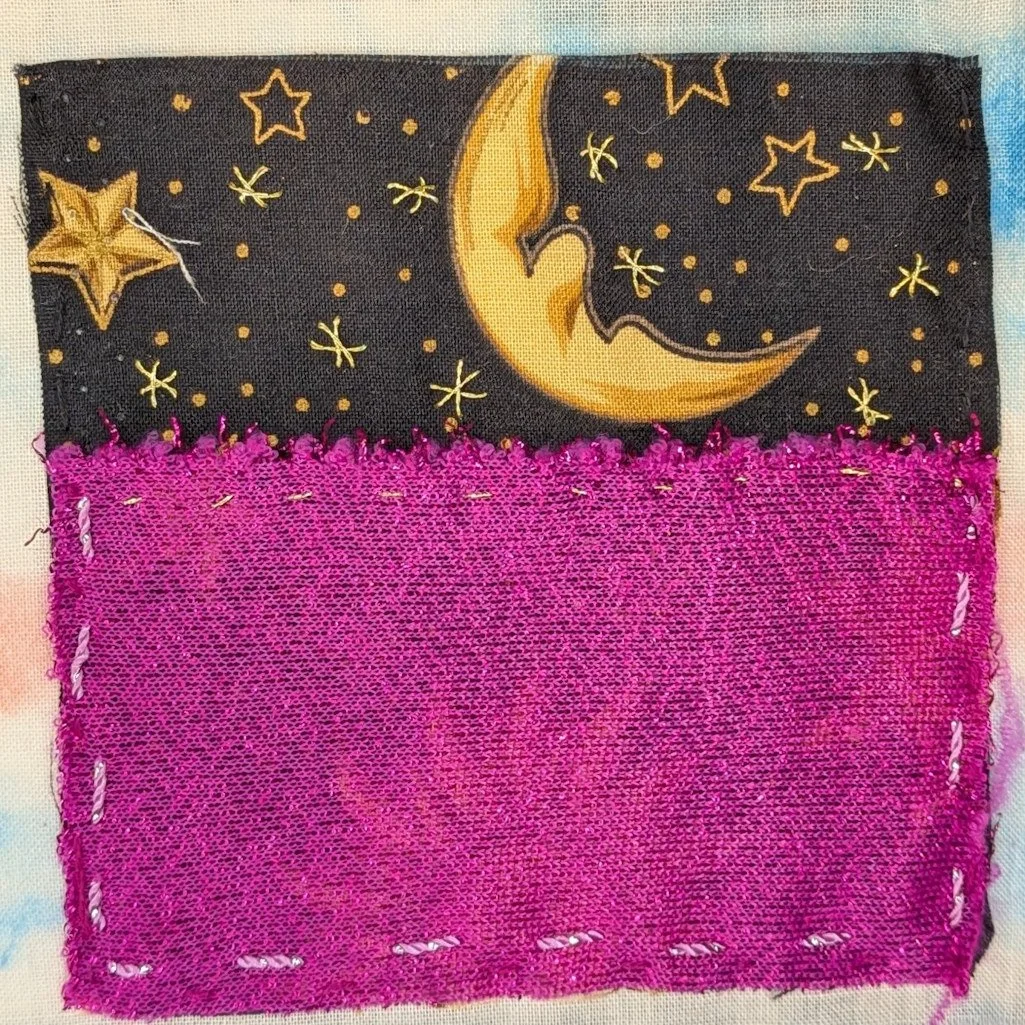
In 2022, during the anatomy scan for her third pregnancy, Chelsea Stovall learned that the girl she was carrying would die because her intestines were strangling her heart and lungs. To honor her daughter, Chelsea got a sparkly pink manicure and her toenails painted like the night sky, for the final goodnight she would say to her baby. Chelsea wanted the doctor who delivered her first two children to deliver Winter, but because of the Arkansas abortion ban, she and her husband were forced to drive to an Illinois clinic, with protesters outside. Her husband was not allowed in the building, so she said good-bye to their daughter alone. “I was surprised by how little I understood what an abortion actually was. . . . It’s not a dirty word. It’s a medical procedure that people get even when they don’t think they will, because things happen that you don’t plan for.” Chelsea is now a plaintiff in Waldorf v. Arkansas, which seeks to strike down the state ban.
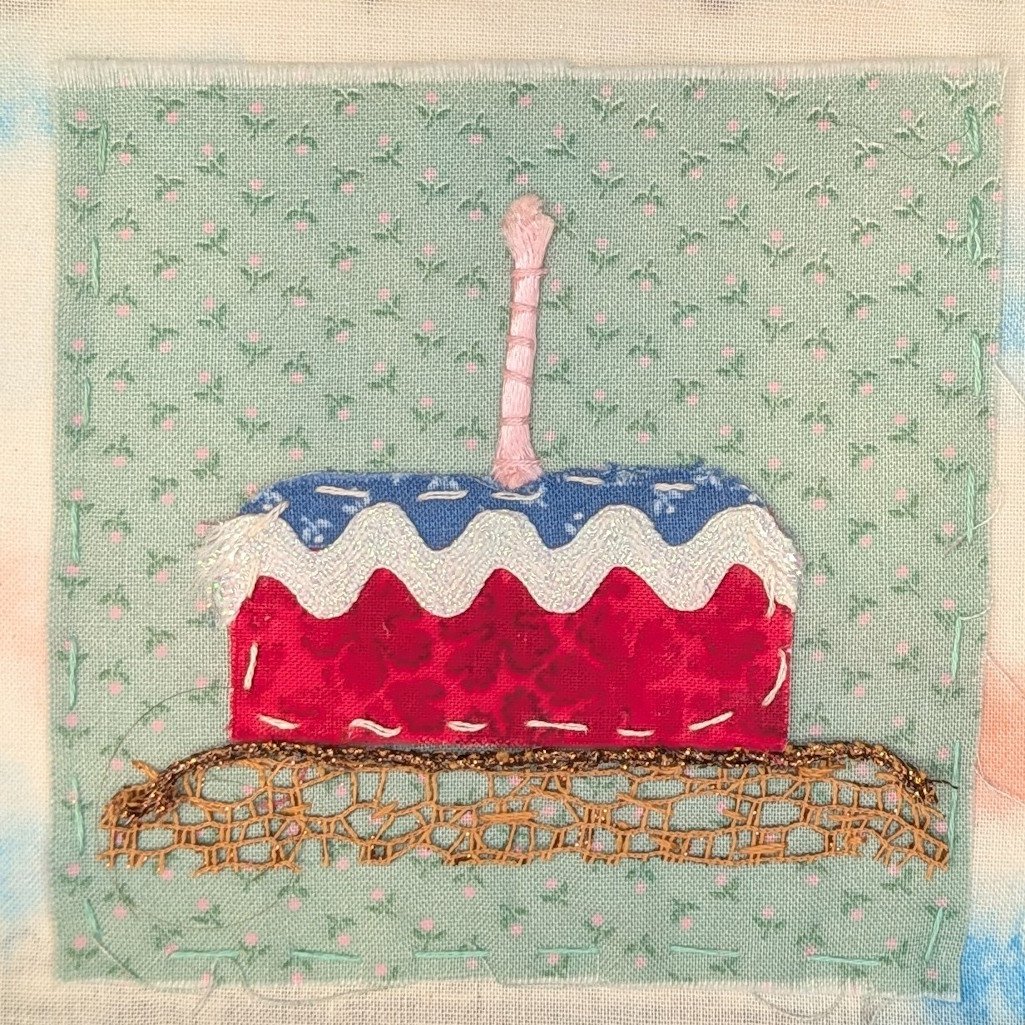
At her 20-week pregnancy scan, Samantha Casiano of Texas learned that her baby was developing without a complete brain or skull. She researched the possibility of leaving the state to end the pregnancy, but because she and her husband both worked, with no allowable time off, shared a car, and had other children, it was impossible. For twelve more weeks, Samantha felt her baby Halo moving and kicking, as strangers asked when she was due. On March 29, 2023, Halo was born and died, gasping for breath, after four hours. Samantha’s family calls Halo’s birthday “Freedom Day,” because “the day she was born is the day she was finally free to go to heaven,” says Samantha. “She shouldn’t have been on this earth, but the state of Texas forced her to be here.”
In June 2026, I shared this project with Samantha.
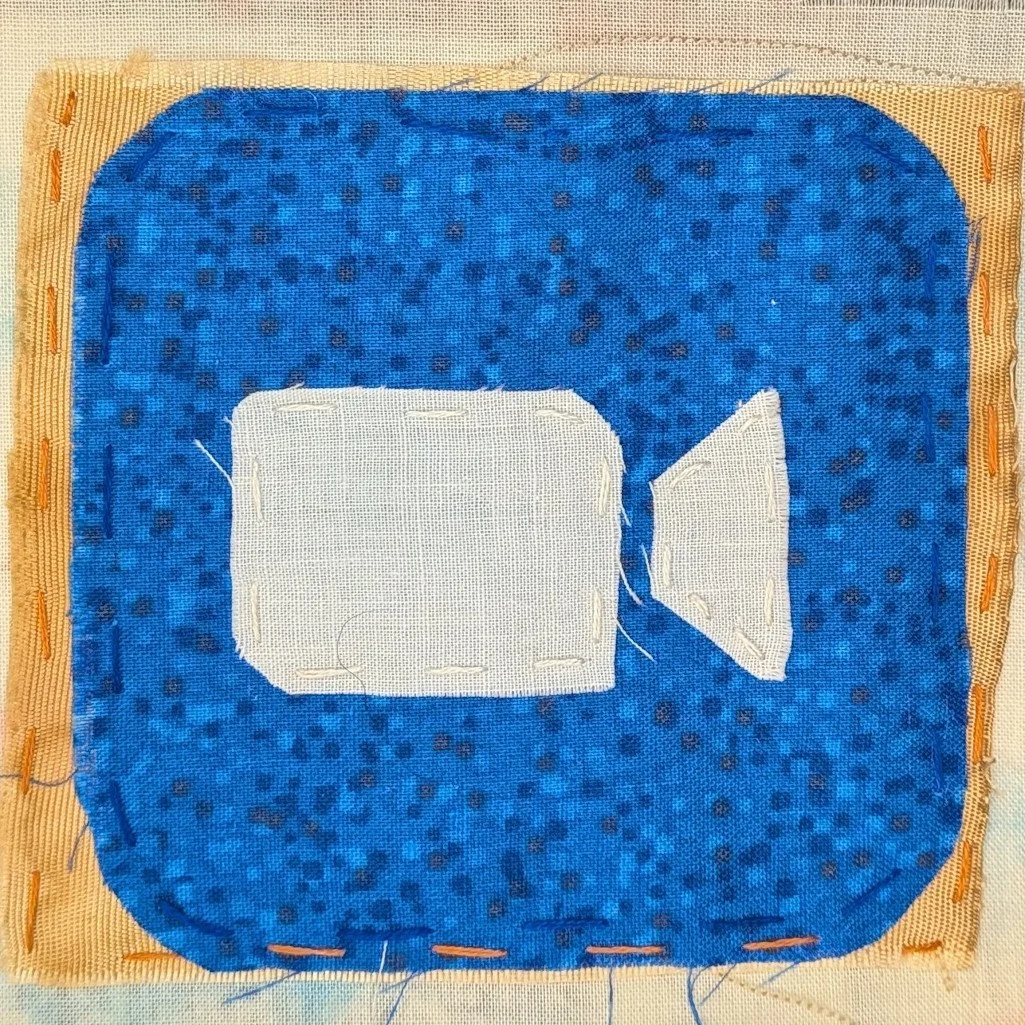
Cherise Doyley, a mother of three and a birth doula, had difficult recoveries, including hemorrhage, from previous C-sections, so she wanted to try to deliver her fourth baby vaginally. She correctly understood that in about 98% of cases, vaginal births after C-sections are safe. In September 2024, in her 12th hour of labor, a tablet was suddenly wheeled up to her bed for a court hearing with hospital doctors via Zoom. She asked for a lawyer or patient advocate, but neither was provided. Although courts have found that patients cannot be treated against their will, even to save another’s life, pregnant women have been the exception. The judge ruled that doctors could perform a C-section without Cherise’s consent in the event of emergency. That night, the baby’s heart rate dropped for several minutes, and the baby was delivered by C-section.
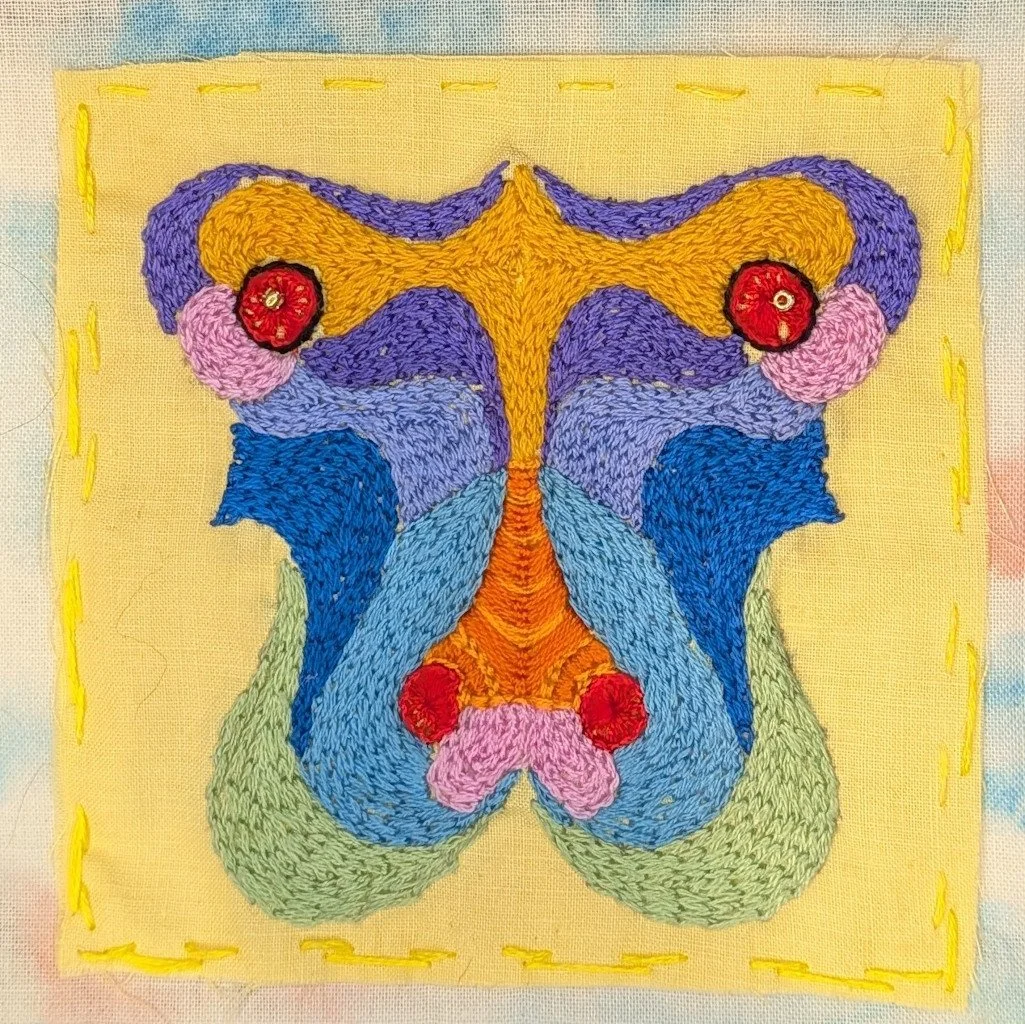
Kishaya Holloway is a professional artist who has long known that she does not want to have children. “Being an artist is about birthing new creative ideas,” she says. “None of my creative ideas involve birthing children.” When she discovered she was pregnant in January 2026, she decided she wanted a procedural abortion, and began researching clinics outside Arkansas. Most of the states nearby also have bans, so she booked an appointment in Kansas and a back-up one in Illinois. Severe winter storms and the need to secure funds for travel and the cost of the procedure delayed her efforts and increased her stress, but she and her partner ultimately were able to drive to Kansas for the abortion. Kishaya is now a plaintiff in Waldorf v. Arkansas, which seeks to overturn the state ban. (With her permission, my stitched image is based on a detail from one of her designs.)
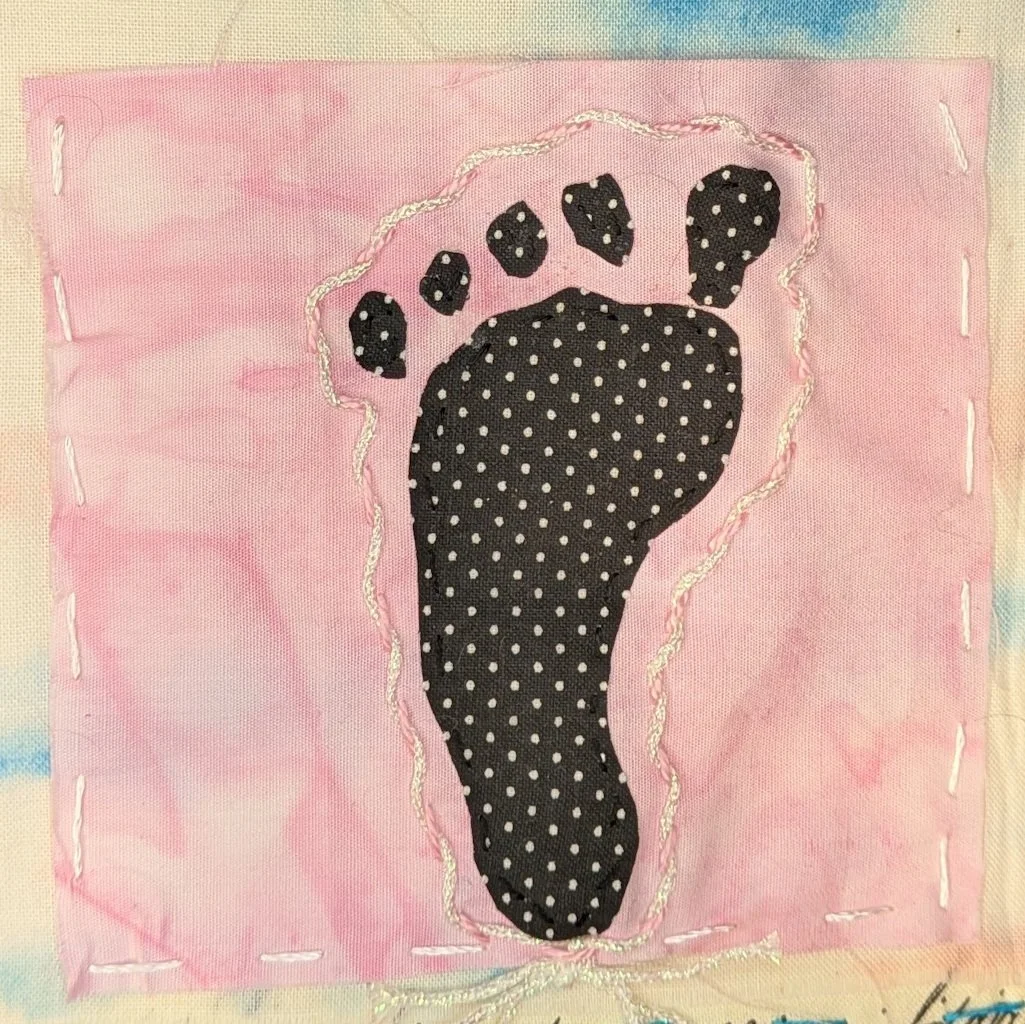
Theresa Van was delighted to learn she was pregnant with a second baby. But then, at 22 weeks, she learned that no amniotic fluid remained. Although the baby Cielle could not survive, Theresa’s doctor told her that, because the baby’s heart was still beating, he could not end the pregnancy without risking a 10-year prison sentence and $100,000 fine. So Theresa was forced to return for ultrasounds: “Going in every week to see if your baby is alive is like a horrific waiting game. It was the longest seven weeks that I’ve ever gone through. It felt like a lifetime.” She then had to travel three hours away to deliver Cielle. Theresa keeps a memory box that includes Cielle’s footprints on a card that reads: “There is no foot so small that it cannot leave a footprint on this world.” Theresa is now a plaintiff in Waldorf v. Arkansas, which seeks to overturn the state ban.
In June 2026, I shared this project with Theresa.
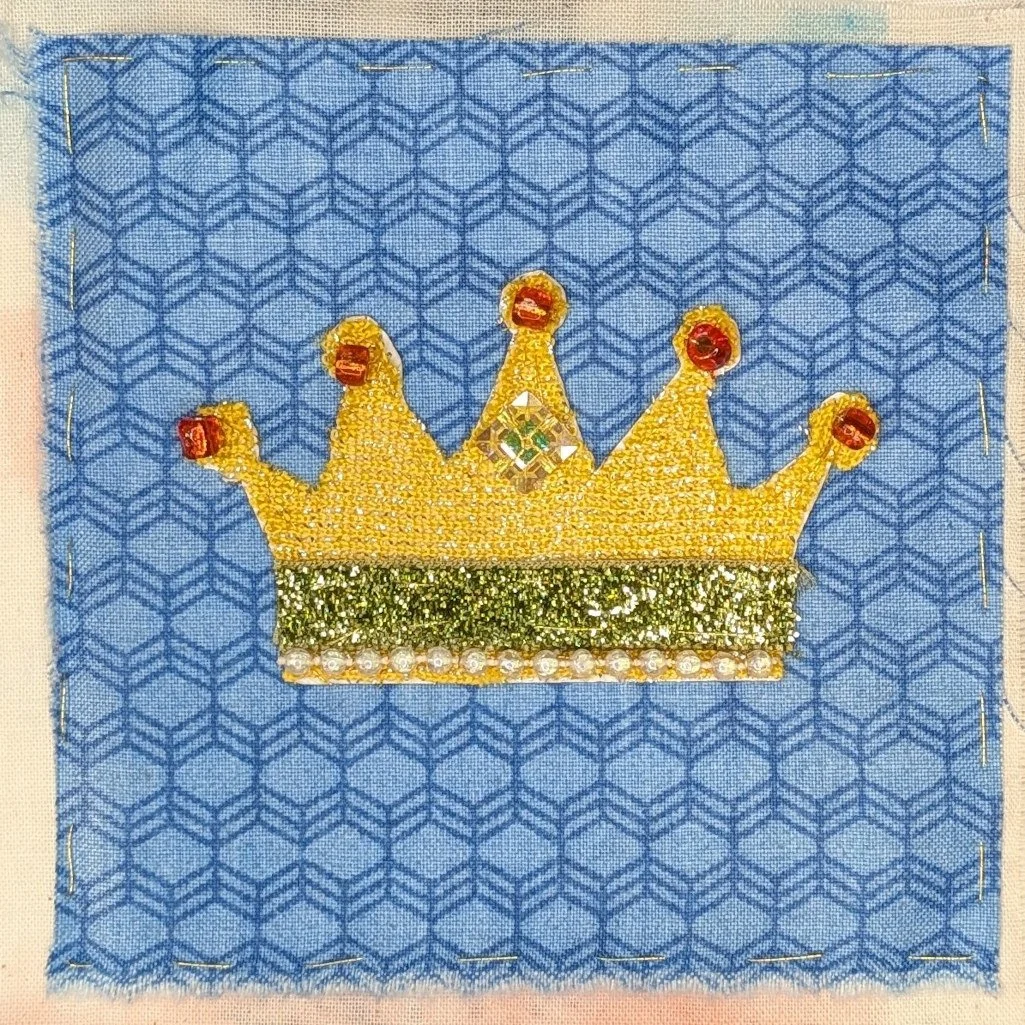
In August of 2024, Allison Howland discovered she was pregnant and ultimately realized she had been drugged and raped by a stranger while on a business trip. She stayed pregnant in case detectives wanted to test the fetus for DNA to determine paternity. Police located the assailant, who said the encounter had been consensual. One of the detectives said he “seemed like a really nice guy.” With great difficulty, Allison traveled to Illinois for an abortion. “I do not want to keep the product of this assault. It is not fair to me, and it’s my life. It is not fair to the potential child that could come out of it . . . . Call that selfish but I stand by it. I was violated and put into extreme danger and living in a state like Arkansas—I was royally fucked.” Allison is now a plaintiff in Waldorf v. Arkansas, which seeks to overturn the state abortion ban, which has no exceptions for rape.
Chelsea Stovall.
“Chelsea Stovall didn’t think she’d ever need an abortion—then Arkansas forced her to flee the state for one.” Abortion in America. January 28, 2026.
Samantha Casiano.
“Forced to Carry a Dying Baby, This Texas Mother of Four Says She Didn’t Think It Could Happen to Her.” Ms. March 27, 2025.
“A Good Friday funeral in Texas. Baby Halo's parents had few choices in post-Roe Texas.” NPR. April 6, 2023.
Cherise Doyley.
Pro Publica Dispatches. March 14, 2026.
“She Was in Labor at a Florida Hospital. Then She Was in Zoom Court for Refusing a C-Section.” Pro Publica. March 20, 2026.
“They Didn’t Want to Have C-Sections. A Judge Would Decide How They Gave Birth.” Pro Publica. March 14, 2026.
Kishaya Holloway.
“Kishaya Holloway is an artist in Arkansas. She never questioned her decision to have an abortion, only the barriers that made it difficult to access care.” Abortion in America. April 9, 2026.
Theresa Van.
“Theresa Van tried to grow her family in Arkansas. She was forced to carry a pregnancy that could not survive.” Abortion in America. Jan. 28, 2026.
Allison Howland.
Complaint, Waldorf v. Arkansas, p. 19-26, Amplify Legal. Jan. 28, 2026.